Blog
Hamm v. Smith: How Could the Court’s Decision Impact Atkins Claims?
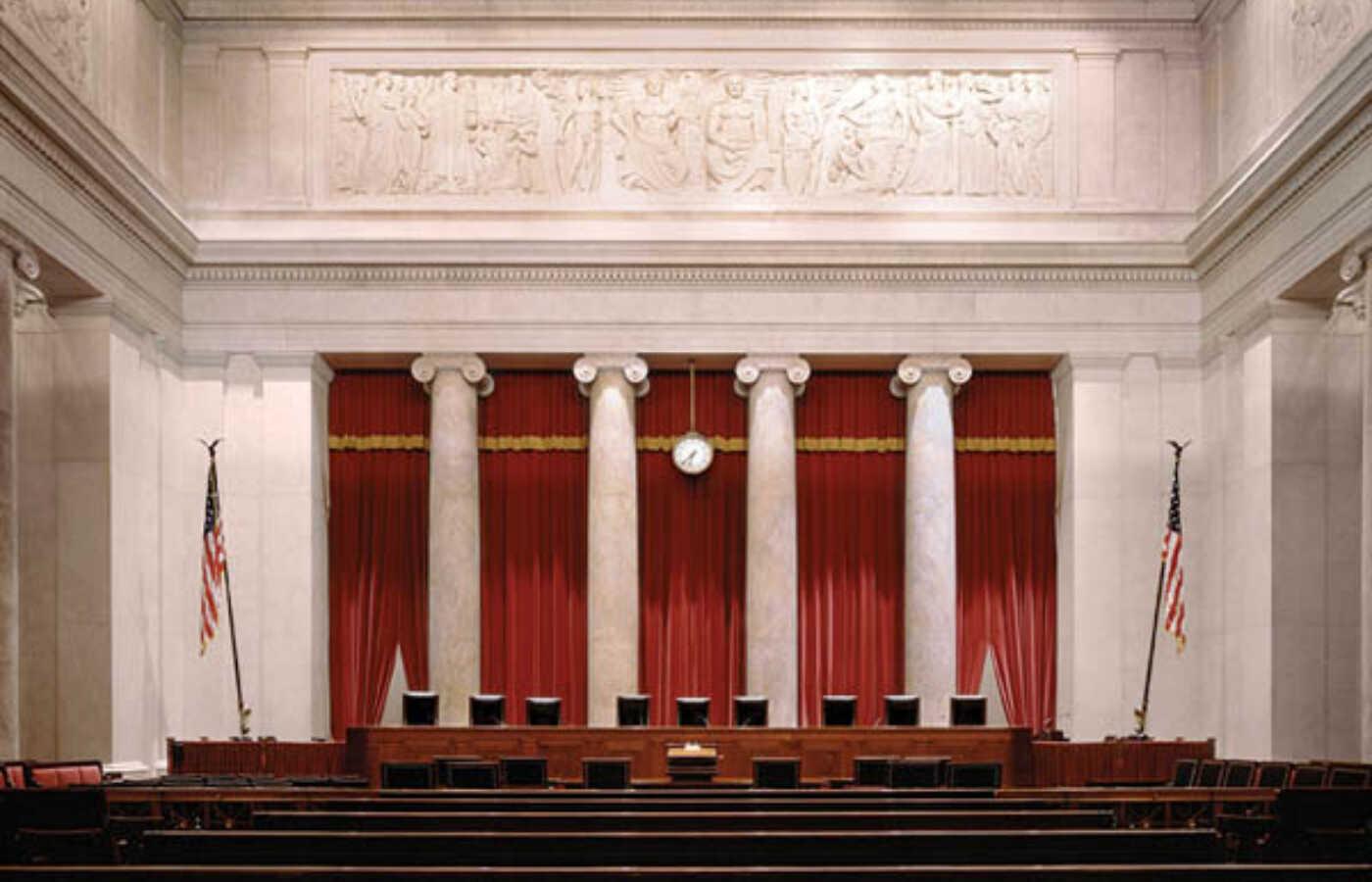
Photo by Supreme Court Curator's Office via supremecourt.gov
The Supreme Court heard oral argument in Hamm v. Smith in December 2025. The issue presented was “[w]hether and how courts may consider the cumulative effect of multiple IQ scores in assessing an Atkins claim.”[1] In 2002, the Court held in Atkins v. Virginia that it is unconstitutional to execute intellectually disabled defendants.[2] Defendants file Atkins claims to plead their intellectual disability and ineligibility for the death penalty. The outcome of Hamm v. Smith has the potential to change the landscape of Atkins claims in the future, particularly if the Court is persuaded by the State of Alabama’s arguments and adopts a process where multiple IQ scores would be mathematically averaged in some way to determine a defendant’s “true” IQ. Such an outcome has the potential to make the lifesaving relief, which is already difficult to receive, even more challenging to obtain.
Taking Alabama’s approach would not only make Atkins relief more difficult to obtain, but it would also be incongruent with how intellectual disability is assessed and determined by clinicians according to the American Association on Intellectual and Developmental Disabilities (AAIDD). In its amicus brief in this matter, AAIDD counseled that while IQ scores are good representations of intellectual functioning, they are still imperfect assessments and inherently limited.[3] IQ scores are not, and cannot be, the “final and conclusive evidence” of intellectual disability, and a “clinically sound evaluation” always entails a review of an individual’s functioning.[4] The AAIDD is clear: IQ scores cannot be averaged in the same way other data points, like weight or height, can be.[5] Because of the way IQ scores are constructed, the AAIDD cautions that averaging them would be “statistically (and clinically) invalid.”[6]
In the development of Atkins and its progenies Hall and Moore, the Court gave considerable deference to the medical community in its holdings to better reflect how the clinicians determine whether an individual is intellectually disabled. The question stands whether the Court will continue to heed the expertise of the medical community in this case and reject the notion that multiple IQ scores can be averaged when making that determination. Judges are not clinicians; if they are in a position to be determining who is and who is not intellectually disabled, they should certainly mind the instructions of the medical community.
Mr. Smith’s Trial
Mr. Joseph Smith has been on Alabama’s death row since 1998; he was charged with capital murder for the intentional killing of Durk Van Dam during a first-degree robbery.[7] During the penalty phase of his trial, Smith’s defense team submitted evidence to show he was under the influence of an “extreme mental or emotional disturbance” at the time of the offense.[8] This evidence included a long history of enduring physical and verbal abuse from his father and step-father, as well as evidence of Smith’s participation in special education classes “for students with emotional conflicts.”[9] Smith’s school records show at age 12 he had obtained IQ scores of 74 and 75.[10] The defense’s expert, Dr. Chudy, administered an IQ test for Smith after having reviewed his school and jail records and testified that he had a full scale IQ score of 72, a score which puts him in the third percentile among the general population.[11] Dr. Chudy noted that there is a standard of error measurement, however, and therefore Smith’s IQ could be as “low as 69” or “as high as maybe a 75.”[12]
The defense also submitted evidence of Smith’s limitations in communication, daily functioning, and his learning and social deficits.[13] Dr. Chudy’s report indicated that Smith required questions to be re-stated to him in “more elementary forms” so he could understand them.[14] Additionally, Dr. Chudy characterized Smith’s as “possess[ing] extremely limited insight and judgment” into his feelings and impulses.[15]
The jury voted 11-1 for Mr. Smith to be sentenced to death.[16] Alabama only requires that a jury reach a 10-2 majority to recommend a death sentence.
The Law Since Smith’s Trial: Atkins and Hall
Smith’s trial and direct appeal occurred before the Supreme Court’s decision in Atkins v. Virginia in 2002, where the Court held that sentencing an intellectually disabled defendant to death is per se unconstitutional under the Eighth Amendment’s prohibition of “cruel and unusual punishments.”[17] While the Court did not explicitly state what IQ score is required for a legal finding of intellectual disability, it did mention that several states at the time regularly prohibited execution of people who possessed an IQ score of “less than 70.”[18] The Court also required a showing of “significant limitations in adaptive skills,” such as communication and self-care, which must “manifest before age 18.”[19] This ruling introduced the concept of Atkins claims, where defendants may plead that their intellectual disability makes them ineligible for the death penalty. For defendants to prevail under Atkins, the Court held they must show: (1) significant subaverage intellectual functioning, generally regarded as an IQ below 70 or 75, (2) significant deficits in adaptive behavior, and (3) a manifestation of those deficits before the age of 18.[20]
In Hall v. Florida, the Court clarified that States may not institute a strict 70-point IQ threshold before a defendant is able to present additional evidence of intellectual disability, as “clinical definitions for intellectual disability” reject such a strict cutoff.[21] At his sentencing phase, Hall presented substantial evidence of intellectual disability to the jury.[22] People in Hall’s life testified to his deficits as a child and as an adult, and explained how the physical abuse he endured “appeared to make his deficits in adaptive functioning all the more severe.”[23] Hall was sentenced to death before Atkins was decided. In 2004, after Atkins, Hall filed a motion claiming he could not be executed because of his intellectual disability and submitted evidence of IQ scores ranging from 71 to 80.[24] Florida, however, denied Hall the opportunity to present any additional evidence to support a showing of intellectual disability under Atkins, holding that the State required he show an IQ score of 70 or below to prevail.[25] On appeal, the Supreme Court rejected Florida’s strict cutoff, holding that the rule disregarded “established medical practice” in two ways: (1) it treated the IQ score as “final and conclusive” evidence of intellectual disability, and (2) it refused to recognize that IQ scores are imprecise and are best understood “as a range” within five points on either side.[26] A score of 71, then, reflects a range between 66 and 76.
As the Court saw it, Atkins itself acknowledged that IQ scores were imprecise and therefore it declined to institute a strict 70-point cutoff, instead favoring an approach that conformed to “clinical definitions” of intellectual disability.[27] Those definitions support the idea that IQ is best understood as a range of scores with five points on either side, and additionally that scores alone are insufficient in assessing intellectual disability.[28] Therefore, defendants like Hall, whose scores fall within the range of 70 to 75, must be given the opportunity to present additional evidence of intellectual disability, such as deficits in adaptive functioning.[29]
Relatedly, in Moore v. Texas, the Court held that states may not rely on outdated tests or “lay perceptions of intellectual disability”[30] that have no grounding in “prevailing medical practice” when determining whether someone is intellectually disabled.[31] While the enforcement of Atkins is left in the hands of the state, lower courts determinations must be “informed by the medical community’s diagnostic framework.”[32]
Smith’s Atkins Claim: The Fight Over How to Interpret Hall and the Road to the Supreme Court
Smith filed a state post-conviction petition in 2004 claiming that he was intellectually disabled and therefore ineligible for the death penalty under Atkins.[33] The State moved to dismiss, and the court ultimately rejected Smith’s claim without allowing an evidentiary hearing where Smith could establish the three Atkins requirements, instead concluding that the evidence submitted at trial refuted any claim that Smith is intellectually disabled.[34] The appellate court affirmed, holding that Smith did “not meet the broadest definition of [intellectually disabled]” because his IQ scores of 74 and 72 were not less than 70. The court did not consider the margin of error in making its determination.[35] The Alabama Supreme Court affirmed.[36]
Smith then filed a federal habeas petition claiming that the Alabama court’s rejection of his Atkins claim was an “unreasonable application of clearly established federal law” under 28 U.S.C. § 2254(d)(1).[37] His petition was denied by the district court in 2013, which found that the Alabama courts did not have to apply the margin of error to Smith’s IQ score of 72, and therefore their determination that Smith “failed to prove his intellectual functioning was or is significantly subaverage” was not an unreasonable application of federal law.[38]
In 2015, the Eleventh Circuit remanded the matter, stating that the district court must reconsider Smith’s request for an evidentiary hearing. It held that the Alabama courts failed to properly consider evidence that Smith’s IQ score could be as low as 69 given the standard of error measurement and thus that the courts’ determination that Smith failed to demonstrate a subaverage intellectual functioning was unreasonable.[39] Additionally, the Eleventh Circuit held that the Alabama Court of Criminal Appeals’ conclusion that Smith did not demonstrate significant deficits in adaptive behavior at trial “was an objectively unreasonable determination of the facts” as presented.[40] The State did not appeal this decision.
On remand, the district court granted Smith’s habeas petition and vacated his death sentence.[41] The court found it must take the standard error of measurement of Smith’s IQ scores into account based on the Supreme Court’s rulings in Hall and Moore.[42] The court did note evidence by the State’s expert that multiple IQ scores over a long period of time “contributes to the construct of validity indicating what a true IQ score is.”[43] While Smith’s five IQ[44] scores, each over 70, would “lean[] in favor of finding that Smith does not have significant subaverage functioning” according to the State’s expert, the court found that Smith’s scores were not “so high” that the standard of error should be disregarded.[45] After reviewing additional evidence of Smith’s deficits in adaptive functioning, the court concluded that Smith was intellectually disabled and vacated his death sentence under Atkins.[46] The Eleventh Circuit held the district court did not err in finding Smith intellectually disabled and affirmed the judgment vacating his death sentence.[47]
Alabama appealed the decision to the Supreme Court, focusing on the fact that despite the fact none of Smith’s IQ scores were under 70, the court “moved on” to the adaptive deficit inquiry under Atkins because the standard error range indicated Smith’s IQ could be as low as 69.[48] They asked two questions: (1) is the intellectual-functioning prong of Atkins satisfied if an offender’s lowest IQ score is below 70 based on the standard error of measurement? and (2) should the Court clarify how courts are permitted to consider multiple IQ scores?[49] The State argued that Smith is not intellectually disabled, and the lower courts incorrectly only considered Smith’s lowest IQ score in making their determination on the intellectual functioning prong rather than considering the “totality of the evidence” before them.[50] The district court ignored evidence submitted by the State that multiple IQ scores can contribute to validity, and thus Smith’s five scores between 72 and 78 should lean in favor of finding that he does not have subaverage intellectual functioning.[51] Further, the State argued that Smith’s case was different from Hall because Alabama was not asking the court to disregard the lower end of the standard error of measurement, but rather asking that the higher end also be given weight.[52]
Smith filed in opposition, stating that the lower courts had correctly considered additional evidence of intellectual disability after Smith produced evidence of valid IQ scores within the 70 to 75 range per Atkins and Hall.[53] Smith argued that, contrary to Alabama’s observation, the lower courts did not find that Smith had satisfied the intellectual functioning prong of Atkins based solely on his IQ score of 72 ± 3.[54] Rather, the lower courts’ determination was made after finding his IQ scores “placed him in the standard-error range” and considering evidence of adaptive functioning evidence as instructed by Hall.[55]
The Supreme Court remanded the matter back down to the Eleventh Circuit, stating that its opinion was “unclear” as to whether it had afforded more weight to Smith’s lower IQ score or whether it took a “holistic approach” in considering all his IQ scores in conjunction with relevant expert testimony.[56]
The Eleventh Circuit answered that it took a “holistic approach to multiple IQ scores” by considering the relevant evidence and determined that the district court did not err in finding Smith was entitled to relief under Atkins.[57] The Eleventh Circuit did suggest that having multiple IQ scores does complicate the determination, and multiple tests may “help identify a test-taker’s true IQ score.”[58] However, the Eleventh Circuit held that because IQ tests may be flawed, even consistent scoring is not “conclusive evidence of intellectual functioning.”[59] The court held that because Smith’s IQ scores were within the 70 to 75 range, taking into account the standard error of measurement for each score, the district court correctly provided Smith the opportunity to present other evidence of intellectual disability, such as deficits in his adaptive functioning as instructed by the holding in Hall.[60]
Alabama again filed a petition in the Supreme Court to appeal the decision to vacate Smith’s death sentence, arguing that Alabama law requires a defendant to prove an IQ of 70 or below to prevail on Atkins and, “[e]ven adjusting for error, there is no way to combine [Smith’s] scores . . . to find an IQ of 70 or less.”[61] The State argued that the Eleventh Circuit did not show any attempt to analyze Smith’s five scores jointly and failed to appreciate that multiple IQ scores suggest validity in the score.[62] The State emphasized that no traditional mathematical method of analyzing Smith’s scores—taking the average, median, or mode—would result in finding Smith’s IQ score to be below 70.[63] It thus concluded that the lower courts should have found that Smith could not satisfy the subaverage intellectual functioning prong of Atkins.[64] The State argued that Alabama may require petitioners to prove an IQ of 70 or less by a preponderance of the evidence, and this does not offend the Court’s holding in Hall.[65] All Hall did, in the State’s view, was prevent states from employing “strict cut-offs” that disregard the standard of error, but “Hall did not move the line to 75” to prove subaverage intellectual functioning.[66]
Smith’s brief in opposition emphasized that the lower courts properly followed the Court’s precedent in determining that Smith was intellectually disabled and therefore entitled to relief under Atkins.[67] In Smith’s view, the Court already held in Hall that determining intellectual disability is not “precise math,” and a single factor, such as an IQ below 70, is not dispositive in determining whether someone is or is not intellectually disabled.[68] What the State asked for, Smith argued, is a violation of the Court’s precedent in Hall.[69] Smith argued that the Court’s precedent is clear: defendants with IQ scores below 70 can still be found intellectually disabled if additional evidence of significant deficits in adaptive functioning suggests so.[70] According to Smith, the district court correctly determined that Smith’s IQ scores, after considering the standard error of measurement for each, placed him in the range between 70 and 75. It therefore properly considered additional evidence of Smith’s deficits in adaptive functioning before determining whether Smith was intellectually disabled or not.[71] After determining Smith was intellectually disabled and entitled to relief under Atkins, the Eleventh Circuit properly reviewed the ruling under the Court’s precedent and affirmed.[72] The State’s argument that the lower courts made their determination solely based on Smith’s lowest IQ score, according to Smith, is a non-starter.[73]
The Supreme Court granted certiorari on the single question of how courts may consider the cumulative effect of multiple IQ scores.[74]
Argument at the Supreme Court
The Supreme Court heard oral argument in Hamm v. Smith on December 10, 2025. At oral argument, the State argued that the lower courts erred because there were multiple other methods the courts could have adopted, but did not, to determine Smith’s IQ score. Those alternate methods included averaging his scores, considering the higher end of his scores because it’s harder to “err” downwards than upwards, and adopting the median of his scores, all of which would have resulted in an IQ score above 70. Any finding that Smith’s IQ score was above 70 after adopting one of these approaches should have led the district court to determine that Smith was not entitled to Atkins relief.[75] One problem with this argument, according to Justice Jackson, was that at no point during the litigation did the State ask the district court to adopt one of these alternative methods.[76]
Justice Sotomayor seemed focused on the holdings in Hall and Moore, reiterating her interpretation of both as suggesting that if any valid IQ score of the defendant’s is below 70 after considering the standard error of measurement, the court “must continue the inquiry and consider other evidence of intellectual disability.”[77] The State and Solicitor General,[78] as amici, argued that the issue was not that the lower courts considered other evidence, but that, in doing so, they neglected to weigh that evidence against the “consistent IQ scores” above 70.[79] Justice Sotomayor appeared unconvinced, stating that both the district court and the State's own expert did in fact weigh the evidence that Smith's IQ was below 70 against the evidence that it was above.[80] That they differed in opinion does not render the court's determination clearly erroneous.
Counsel for Smith focused on the idea that significant sub-average functioning is a “condition, not a test score,” and thus singularly looking to IQ scores is inappropriate.[81] Smith maintains that the law requires the court to consider other evidence, including evidence of deficits in adaptive functioning, if the defendant’s IQ scores are inconclusive in determining sub-average intellectual functioning. He argues that is precisely what the lower courts did in this case.[82] Because four out of five of Smith’s IQ scores fall within the range of intellectual disability after taking into consideration the standard error of measurement, the district court did not err in considering other evidence, nor did it err in concluding the additional evidence in conjunction with Smith’s scores support a finding that Smith is intellectually disabled.[83]
After reviewing the oral argument transcript, it seems unclear how the Justices will fall in determining whether the lower courts erred in their determinations. The opinion is predicted to be announced in the spring of 2026.
How Might the Decision in Smith Affect Atkins Relief?
The question the Supreme Court is wrestling with is how multiple IQ scores should be analyzed and weighed by lower courts in making Atkins determinations. The State seems to argue for imploring lower courts to take a precise mathematical approach, such as the median of the scores, when there are multiple IQ scores in evidence.[84] If, after taking such an approach, the determined score is not below 70, the State argues the defendant has failed the first prong of Atkins and is therefore not entitled to relief. Even if the determined score, after taking the mathematical approach, falls within the 70 to 75 range described in Hall, the court need not move on to considering adaptive deficits because the multiple scores create “validity.” That validity should prevent courts from determining the defendant’s IQ score could still potentially be below 70, even given the traditional standard error of measurement scale of ± 5 points.
Such an approach, if a majority of the Supreme Court agrees, would potentially make Atkins inquiries mostly determinative on having a median IQ score above or below 70, an outcome some would argue is what the precedent in Hall was trying to avoid. The State seems to suggest that Hall simply rejected a hard cut-off at 70 and places less emphasis on Hall’s insistence that IQ scores alone are insufficient in determining whether someone is intellectually disabled.
Another possibility is that the Court rules in favor of Smith but takes an opportunity to clarify the holding of Hall to suggest that numerous IQ scores well above 70 must be considered by lower courts as evidence weighing against a finding of intellectual disability, and a single low score cannot be solely determinative. During Oral Argument, members of the Court took considerable time to engage in conversation with Counsel for Smith regarding what he believes the outcome should be if, for example, someone had one IQ score of 71 but four more in the nineties.[85] Counsel for Smith seemed to agree that while the single score of 71 should still encourage courts to engage in further fact-finding, the four other scores in such a scenario would likely lend to a determination that the hypothetical defendant is not intellectually disabled.[86] This holding would (and should) not prevent the Court from affirming relief for Smith, however, as four of five of Smith’s scores were within the 70 to 75 range which warrants further fact-finding in Hall. Such a holding could instruct and potentially encourage lower courts when considering multiple IQ scores, especially when those scores have a vast range, to weigh the upper range of scores more heavily before making their determination after they have considered additional evidence of adaptive deficits.
Finally, the Court may potentially rule in favor of Smith and affirm Hall in a different way, focusing instead on clarifying the procedure lower courts must go through when a defendant proves multiple valid IQ scores within the 70 to 75 range. The Court may hold that the lower courts in this case did precisely what Hall instructs them to do, which is to consider additional evidence including evidence of deficits in adaptive functioning. In weighing such evidence, the Court may invite lower courts to use their judicial common sense, inviting testimony from experts in intellectual functioning and disability, in determining whether the additional evidence presented supports a finding that the defendant is intellectually disabled. Such a holding would likely change little about how Atkins operates today.
Conclusion
The outcome in Hamm v. Smith has potential to change the landscape of Atkins claims in the future, particularly if the Court wholesale signs on to what the State of Alabama argued for in their briefs and at oral argument. Such an outcome would make already difficult and lifesaving relief even more challenging to obtain. This note encourages the reader to consider the implications of states having the power to make determinations of who is and is not intellectually disabled. Several people have been sentenced to death and executed despite having compelling claims of intellectual disability, an outcome that Atkins holds is a fundamental violation of the Eighth Amendment’s prohibition of cruel and unusual punishment.[87]
The AAIDD counsels in its amicus brief on the matter that, while IQ scores are good representations of intellectual functioning, they are nonetheless an incomplete and imperfect assessment.[88] IQ tests and scores are inherently limited and imprecise tools for measuring intellectual disability; there may be error and bias in scoring determinations, the test given may not be appropriate for the tested individual, and scores can inflate over time if tests are taken in quick succession, given the “practice effect.”[89] Multiple IQ scores, the AAIDD argues, do not provide a “perfect measure of intellectual functioning” and should not eliminate the consideration of other information.[90] This is why it urges courts, like clinicians, to consider additional evidence of deficits in adaptive functioning. IQ scores alone cannot be the conclusive evidence of whether someone is intellectually disabled.[91]
If courts should at all be making determinations over whether someone is intellectually disabled or not, they should certainly be heeding the instructions of the medical community in doing so.
[1] Hamm v. Smith, 145 S. Ct. 2776 (2025).
[2] Atkins v. Virginia, 536 U.S. 304 (2002).
[3] Brief of Amici Curiae the American Association on Intellectual and Developmental Disabilities (AAIDD), the Arc of the United States, the Bazelon Center for Mental Health Law, and the National Disabilities Rights Network (NDRN) in Support of Respondent at 16, Hamm v. Smith, 604 U.S. 1 (No. 24-872) (Sep. 24, 2025), 2025 WL 2796835.
[4] Id. at 27.
[5] Id. at 26.
[6] Id. at 26 n.18.
[7] Smith v. Campbell, 620 Fed. Appx. 734, 736 (11th Cir. 2015).
[8] Id. at 738.
[9] Id.
[10] Id.
[11] Id.
[12] Id. at 738.
[13] Id. at 740.
[14] Id.
[15] Id. at 741.
[16] Id. at 739.
[17] Atkins v. Virginia, 536 U.S. 304, 320 (2002).
[18] Id. at 316.
[19] Id. at 318.
[20] Id.
[21] Hall v. Florida, 572 U.S. 701, 702 (2014).
[22] Id. at 705.
[23] Id. at 706.
[24] Id. at 707.
[25] Id. at 708.
[26] Id. at 701-02.
[27] Id. at 719.
[28] Id. at 723.
[29] Id.
[30] For example, courts may not contemplate overemphasizing a defendant’s adaptive strengths by inferring from the commission of the crime an ability to “formulate plans” or exhibit “forethought, planning, and complex execution.” See Moore v. Texas, 586 U.S. 113, 137 (2019) (citation omitted).
[31] Id.
[32] Id.
[33] Smith v. Campbell, 620 Fed. Appx. 734, 742 (11th Cir. 2015).
[34] Id. at 743.
[35] Id. at 743.
[36] Id.
[37] Id. at 744. Section 2254(d) states that an application for habeas corpus cannot be granted unless the decision was a result that is “contrary to, or involved an unreasonable application of, clearly established Federal law, as determined by the Supreme Court of the United States.” 28 U.S.C. § 2254(d). A state court’s application is considered unreasonable if no “fairminded jurist” could agree on the reached outcome based on the record before it. See Harrington v. Richter, 563 U.S. 86, 101 (2011).
[38] Smith v. Campbell, 620 Fed. Appx. at 745.
[39] Id. at 750.
[40] Id.
[41] Smith v. Dunn, No. 05-00474-CG, 2021 WL 3666808, at *1 (S.D. Ala. Aug. 17, 2021).
[42] Id. at *2.
[43] Id. at *3.
[44] Smith’s IQ scores are 75, 74, 72, 78, and 74.
[45] Smith v. Dunn, 2021 WL 3666808, at *3.
[46] Id. at *13.
[47] Smith v. Ala. Dep’t of Corr., 67 F.4th 1335, 1354 (11th Cir. 2023).
[48] Petition for Writ of Certiorari at ii, Hamm v. Smith, 604 U.S. 1 (No. 23-167) (Aug. 17, 2023).
[49] Id.
[50] Id. at 3.
[51] Id. at 8.
[52] Id. at 14.
[53] Brief in Opposition at ii, Hamm v. Smith, 604 U.S. 1 (No. 23-167).
[54] Id. at 16.
[55] Id. at 18.
[56] Hamm v. Smith, 604 U.S. 1, 2 (2024).
[57] Smith v. Comm’r, Ala. Dep’t of Corr., No. 21-14519, 2024 WL 4793028 at *1 (11th Cir. Nov. 14, 2024).
[58] Id. at *3.
[59] Id.
[60] Id.
[61] Petition for Writ of Certiorari at 1, Hamm v. Smith, 604 U.S. 1 (No. 24-872).
[62] Id. at 2.
[63] Id.
[64] Id.
[65] Id. at 14.
[66] Id.
[67] Brief in Opposition at 2-4, Hamm v. Smith, 604 U.S. 1 (No. 24-872).
[68] Id. at 2.
[69] Id. at 2.
[70] Id. at 17.
[71] Id. at 18.
[72] Id. at 18-19.
[73] Id. at 19.
[74] Hamm v. Smith, 145 S. Ct. 2776 (2025).
[75] Oral Argument at 38:04, Hamm v. Smith, __ U.S. __ (2026) (No. 24-872), https://www.supremecourt.gov/oral_arguments/audio/2025/24-872.
[76] Id.
[77] Id. at 47:15.
[78] Hamm v. Smith, 146 S. Ct. 291 (2025).
[79] Oral Argument, supra note 75, at 48:20.
[80] Id. at 48:39.
[81] Id. at 1:28:53.
[82] Id.
[83] Id.
[84] Id. at 31:38.
[85] Id. at 1:32:00.
[86] Id.
[87] Teresa Lewis, 10 Years Later: Still Executing The Intellectually Disabled?, Amnesty Int’l (June 20, 2012), https://www.amnestyusa.org/blog/10-years-later-still-executing-the-intellectually-disabled/.
[88] Brief of Amici Curiae the American Association on Intellectual and Developmental Disabilities (AAIDD), the Arc of the United States, the Bazelon Center for Mental Health Law, and the National Disabilities Rights Network (NDRN) in Support of Respondent at 16, Hamm v. Smith, 604 U.S. 1 (No. 24-872) (Sep. 24, 2025), 2025 WL 2796835.
[89] Id. at 20-21. Another issue the AAIDD’s amicus brief does not take up, but is relevant for consideration, is whether courts should adjust IQ scores in consideration of the Flynn Effect, which refers to the “observed rise in IQ scores over time.” Lisa Trahan et al., The Flynn Effect: A Meta-analysis, Psych. Bull. (Sep. 2, 2014), https://pmc.ncbi.nlm.nih.gov/articles/PMC4152423/. Because IQ scores are standardized at a specific point in time, and IQ on average increases 0.3 points each year, the Flynn effect suggests that an individual will score higher on an IQ test from many years ago than on the current version. Id. This is important to consider in a capital punishment context, particularly when defendants have multiple IQ scores “with different normative samples over time.” Id.
[90] Brief of Amici Curiae, supra note 88, at 24.
[91] Id. at 27.