Blog
America Doesn’t Protect Kids, It Prosecutes Them
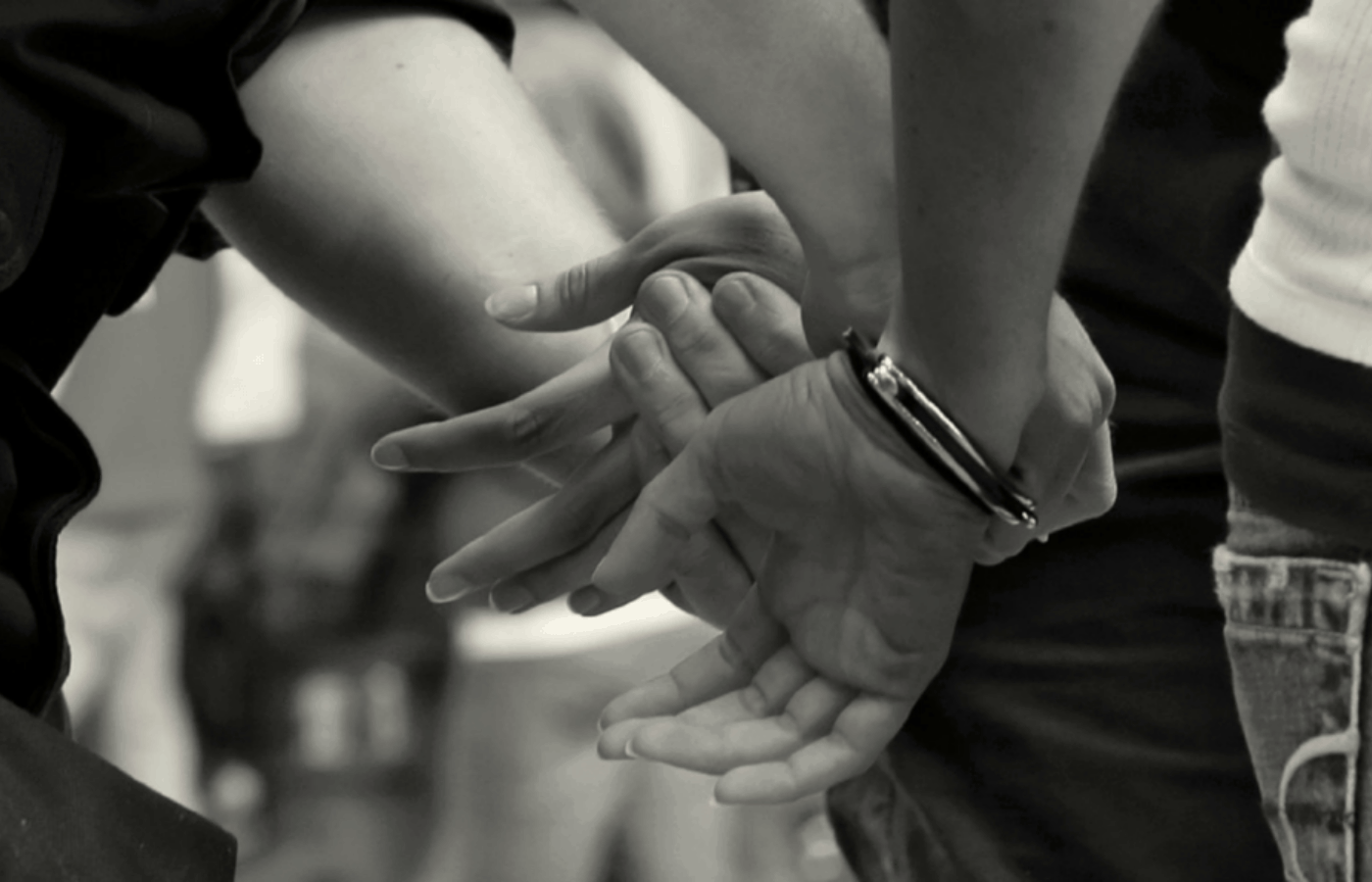
Photo by Shriver Center on Poverty Law
Introduction
America’s proclivity for criminalization does not spare children. In fact, quite the opposite.
Those who endure abuse as children often end up incarcerated as youths and ultimately recidivate as adults, reinforcing a malignant cycle of punishment that fails America’s most vulnerable every step of the way.[1] Children who experience abuse or neglect are 59% more likely to be arrested as juveniles and 28% more likely to be arrested as adults.[2]
The overt link between childhood trauma and incarceration demands the need for early intervention in youth maltreatment. Equally clear, however, are the detrimental impacts of the predominant intervention tactics employed in the United States today, specifically by the country’s legal and education systems.
The Legal System
As of March 2026, 34,000 youths were incarcerated in the United States.[3] Of those, about 800 were detained for “status offenses”—conduct that is only considered unlawful because of a person’s status as a minor.[4] Many common responses to childhood trauma, such as stress, anger, depression, and anxiety, can manifest in behaviors like disengaging from school, running away from home, or defying authority.[5] While these behaviors are often coping mechanisms, the legal system treats them as offenses deserving of punishment.[6]
Childhood behaviors consistent with experiencing trauma are criminalized unabashedly.
These behaviors are formally categorized as “status offenses.”[7] In 2022, 64% of juvenile status offenses were for missing school, 9% were for running away from home, 9% were for being deemed “ungovernable,” 8% were for underage liquor violations, and 3% were for breaking curfew.[8]
Further, a staggering 94% of children serving adult sentences experienced early traumas, underscoring the profound link between childhood maltreatment and later system involvement.[9] Rather than recognizing trauma as a root cause, the legal system responds to its symptoms with punishment, effectively criminalizing the very behaviors that signal a need for care and intervention.
These patterns reveal a system that is not merely failing to address childhood trauma but actively exacerbating its consequences. By treating trauma-driven behaviors as criminal, the legal system reinforces a counterproductive reality in which vulnerable youth are punished instead of supported.
The Education System
The tendency to penalize youth who have experienced trauma is not unique to the legal system. Detrimentally, schools have followed suit. Following the “tough on crime” agenda that rose to prominence amidst the war on drugs in the 1980s, schools across the country began adopting the “broken windows” method of handling students’ misbehavior.[10] This approach theorizes that minor offenses should be penalized harshly—“regardless of the seriousness of behavior, mitigating circumstances, or situational context”—to deter the commission of more serious crimes in the future.[11] In practice, it materializes as zero tolerance policies that result in suspensions for minor school infractions.[12] Following its implementation, the number of students suspended from school each year surged from 1.7 million in 1974 to an overwhelming 3.1 million in 2001.[13]
The Community Oriented Policing Services (COPS) program, a manifestation of zero tolerance policies, made this possible. Authorized under the Violent Crime and Law Enforcement Act of 1994, this program provided an influx of funding to establish police presence in schools.[14] Since 1999, the federal government has spent more than one billion dollars to finance the placement of law enforcement in schools.[15] In the 2017-18 school year, 47% of schools in the United States had a permanent police presence, while 59% of middle schools and 68% of high schools had a part-time police presence.[16]
Records show that police have brutalized children in schools across forty-five states “for offenses as minor as failing to go to the principal’s office, standing on a school bus, or picking at a sign taped to a door.”[17] In schools with a permanent police presence, insignificant disruptions and misbehaviors by children culminate in violent apprehensions.
Parallel to the racial disparities plaguing the adult carceral system in America, school discipline is used more frequently against students of color, with Black students being the most impacted.[18] Black students make up 15.1% of the public schools’ population nationwide.[19] Yet, in the 2017-18 school year, Black students comprised 28.7% of the students referred to law enforcement and 31.6% of the students arrested at school.[20] In the nineteen states that still allow for the use of corporal punishment in schools, Black children are the recipients of such violence 37.3% of the times it is used.[21]
Notably, studies document that the disciplinary gap between Black students and white students is not caused by different behavioral reasons for suspension or different degrees of involvement in misbehavior.[22] Rather, racial biases permeate the education system’s approach to punishment.
Systemic Impacts
Contrary to the dominant approaches used by the American legal and education systems, increased policing, heightened surveillance, and harsher school discipline are ineffective responses to youths who experience childhood maltreatment.
Such interferences in the lives of children who have already endured abuse only exacerbate their trauma and increase their likelihood of recidivism as adults. Between 70 and 80% of youth who were released from correctional programs across thirty-eight states were rearrested within only two to three years.[23] Among the adults in state prisons, 38% were arrested before the age of sixteen.[24]
The notion that incapacitating youth will “scare them straight” is not only ignorant and antiquated, it has no factual basis.[25]
While less than 1% of those in the general population report experiencing maltreatment as children, between 45 and 54% of incarcerated men reported a history of childhood physical abuse, between 53 and 62% reported a history of childhood emotional abuse, and between 9 and 11% reported a history of childhood sexual abuse.[26]
Together, these facts make clear that punitive, surveillance-based approaches do not deter harm but perpetuate it, creating a pipeline from childhood trauma to incarceration.
Theories of Punishment and Their Unsuitable Application to Children
The counterproductive criminalization of children in the United States—many of whom have experienced maltreatment—must be understood in light of the country’s combined reliance on retributive and utilitarian punishment models, both of which are poorly suited in their application to youth.
Retribution
Retributive punishment evaluates wrongdoing either by focusing on the actor’s blameworthiness or the harm caused. When applied to children, however, both approaches are deeply flawed.
A culpability-based framework fails to account for the realities of childhood: youths have diminished autonomy, limited control over their environments, and heightened susceptibility to external influences, including abuse and neglect.[27] Holding children to adult standards of blameworthiness ignores these constraints. A harm-based approach is similarly problematic as it prioritizes the consequences of an act over the context in which it occurred, often resulting in disproportionately harsh punishment for behavior rooted in trauma or immaturity.[28] These shortcomings are especially concerning given that, in the United States, harm-based retributive approaches frequently predominate, exposing youth to severe penalties without adequate consideration of their developmental status or lived circumstances.
While crimes committed by youths are not limited to status offenses and can result in severe harm, such an aggressive approach to penalization only increases the likelihood of re-offending.[29]
Utilitarianism
Utilitarian punishment, which seeks to deter future wrongdoing by making its costs outweigh its benefits, is likewise ill-suited for children. Both general and specific deterrence rest on the assumption that individuals engage in rational cost-benefit analyses before acting. This assumption breaks down when applied to youth.
While the utilitarian approach is inapt in its general application because it presupposes that this cost-benefit analysis is being done by a purported—and frankly, exceptional—rational actor, it is especially inappropriate to apply such a theory to children.[30] Emotionally, children find it more difficult to weigh the long-term costs and benefits of their actions when compared to adults, being more inclined to think impulsively without considering future consequences.[31]
Despite these limitations, utilitarian logic continues to be used as a justification for expansive and punitive interventions against youth in both legal and educational settings.[32] The broken windows method is one such offshoot of this model.
America’s Retributive and Utilitarian Model
The purported goals of deterrence under utilitarianism and moral equilibrium under retribution are unworkable in the United States. In practice, these models have destructive consequences, specifically when employed against youth. Utilitarianism and retribution expose youth to greater violence by funneling them into the carceral system for wrongdoings without recognizing the circumstances relevant to their actions or the fact that children are much less likely to fit the mold of the rational actor.[33]
Attempts to justify the punitive procedures employed by our legal and education systems under the retributive and utilitarian theories are therefore ineffective when one considers their real-world applications. Even if the goals of retribution and utilitarianism were realized when applied to adult actors, they would materialize differently when applied to youths, a truth that our current systems do not recognize.[34]
Accordingly, the continued reliance on these frameworks in juvenile and school-based contexts reflects a fundamental mismatch between prevailing theories of punishment and the realities of childhood.
Possible Solutions
In order to disrupt the cycle of harm that sees mistreated children become involved in criminalized behaviors, the implementation of resources that divorce them from cycles of violence is necessary. Youth advocacy programs are one such path forward, and their impacts crystalize their importance: Youth Advocate Programs, a national organization that seeks to provide alternatives to youth incarceration through community-based educational, psychological, and familial services, found that of their nearly 20,000 program participants, 92% returned to living safely in their communities after discharge and 98% were not convicted of a new felony.[35] Youth Advocate Programs currently operates across thirty-five states and over 150 communities in the U.S.[36]
The approach taken by youth advocacy programs differs starkly from that employed by law enforcement against traumatized youth. Rather than meeting youth with penalty and force, these programs center individualized, community-based care that addresses the underlying causes of criminalized behavior. Organizations like Youth Advocate Programs embed trained advocates directly in youths’ daily environments—homes, schools, and neighborhoods—where they provide intensive mentorship, crisis support, and skill-building tailored to each child’s needs. They work not only with the youth, but alongside families and community members, strengthening relationships and stabilizing the environments to which children will ultimately return. This holistic model recognizes that children’s behavior is often a product of unmet needs and trauma, and responds by building support systems rather than imposing punishment. In doing so, youth advocacy programs interrupt cycles of harm at their source, offering a sustainable alternative to the punitive systems that too often exacerbate them.
Conclusion
The criminalization of youth in the United States makes clear the priorities of those presiding over the country’s education and legal systems: punishment for the sake of subjugation, with no regard for meaningful intervention in youth maltreatment.
Meaningful reform requires shifting away from punitive responses and toward trauma-informed approaches that address the underlying harm rather than penalize its expression. Currently, the American tendency toward punishment only perpetuates the harms it purports to deter; in doing so, it exists in flagrant contradiction of the needs of youths, who deserve to heal in environments free from violence, rather than be further shaped by them.
[1] Miguel Basto-Pereira et al., Growing Up with Adversity: From Juvenile Justice Involvement to Criminal Persistence and Psychosocial Problems in Young Adulthood, 62 Child Abuse & Neglect 63, 64 (2016).
[2] Id.
[3] Wendy Sawyer et al., Mass Incarceration: The Whole Pie 2026, Prison Pol’y Initiative (Mar. 11, 2026), https://www.prisonpolicy.org/reports/pie2026.html.
[4] Id.
[5] Effects of Complex Trauma, Nat’l Child Traumatic Stress Network, https://www.nctsn.org/what-is-child-trauma/trauma-types/complex-trauma/effects.
[6] Id.
[7] Sawyer et al., supra note 3.
[8] Sarah Hockenberry & Charles Puzzanchera, Juvenile Court Statistics 2022 64 (Off. of Juv. Just. & Delinq. Prevention 2024), https://ojjdp.ojp.gov/publications/juvenile-court-statistics-2022.pdf.
[9] Sara Tiano, Children Charged as Adults in Justice System Have Overwhelming Histories of Trauma, Researchers Find, The Imprint (Jan. 13, 2026), https://imprintnews.org/top-stories/children-charged-as-adults-have-histories-of-trauma/270203.
[10] Steven C. Teske, A Study of Zero Tolerance Policies in Schools: A Multi-Integrated Systems Approach to Improve Outcomes for Adolescents, 24 J. Child & Adolescent Psychiatric Nursing 88, 88–89 (2011).
[11] Id.
[12] Id.
[13] Id.
[14] Office of Comm. Oriented Policing Servs., About the COPS Office, U.S. Dep’t of Just., https://cops.usdoj.gov/aboutcops (“History of the Office…authorized an $8.8 billion expenditure over six years”).
[15] Strategies for Youth, Two Billion Dollars Later: States Begin to Regulate School Resource Officers in the Nation’s Schools (Oct. 2019), https://strategiesforyouth.org/sitefiles/wp-content/uploads/2019/10/SFY-Two-Billion-Dollars-Later-Report-Oct2019-ES.pdf.
[16] Lawyers for Good Government, Armed, Dangerous, and Outside the Law: How School Resource Officers Escape Even Basic Liability for Hurting Kids, https://www.lawyersforgoodgovernment.org/police-in-schools-report/.
[17] Id.
[18] Linda Darling-Hammond & Eunice Ho, No Matter How You Slice It, Black Students Are Punished More: The Persistence and Pervasiveness of Discipline Disparities, 10 AERA Open 1 (2024).
[19] School‑to‑Prison Pipeline, Am. C.L. Union, https://www.aclu.org/issues/racial-justice/school-prison-pipeline.
[20] Id.
[21] Cruel Schools: The Eighteen States that Still Allow Corporal Punishment in Schools and the Resulting Harms to Children of Color and Students with Disabilities, Laws. for Good Gov’t, https://www.lawyersforgoodgovernment.org/corporal-punishment-report.
[22] Francis L. Huang & Dewey G. Cornell, Student Attitudes and Behaviors as Explanations for the Black-White Suspension Gap, 73 Child. & Youth Servs. Rev. 298 (2017).
[23] Richard A. Mendel, No Place for Kids: The Case for Reducing Juvenile Incarceration, Annie E. Casey Found. (2011), https://www.aecf.org/resources/no-place-for-kids.
[24] Leah Wang et al., Beyond the Count: A Deep Dive into State Prison Populations, Prison Pol’y Initiative (Apr. 2022), https://www.prisonpolicy.org/reports/beyondthecount.html.
[25] Claudia van der Put et al., Effects of Awareness Programs on Juvenile Delinquency: A Three‑Level Meta‑Analysis, 64 Int’l J. Offender Therapy & Comp. Criminology (2020).
[26] Jennifer Boland et al., Pathways to Incarceration: An Examination of Childhood Maltreatment and Personality Psychopathology in Incarcerated Adults, 27 Psych., Crime & L. 253, 254 (2021).
[27] Richard A. Mendel, Effective Alternatives to Youth Incarceration, Sent’g Project (June 28, 2023), https://www.sentencingproject.org/reports/effective-alternatives-to-youth-incarceration/.
[28] Different Types of Punishment, BetterHelp, https://www.betterhelp.com/advice/punishment/different-types-of-punishment/.
[29] Mendel, supra note 22.
[30] Jeffrey Fagan & Alex R. Piquero, Rational Choice and Developmental Influences on Recidivism Among Adolescent Felony Offenders, 4 J. Empirical Legal Stud. 715, 715 (2007).
[31] Id. at 719.
[32] See generally Thomas A. Loughran et al., Studying Deterrence Among High-Risk Adolescents, Off. Juv. Just. & Delinq. Prevention (Aug. 2015), https://ojjdp.ojp.gov/sites/g/files/xyckuh176/files/pubs/248617.pdf.
[33] Brianna L. Traub, Rethinking Juvenile Justice for Traumatized Youth, 93 U. Cin. L. Rev. 236, 238 (2024).
[34] Id.
[35] Youth Advocate Programs, Inc., 2024 Annual Report (2024), https://www.yapinc.org/Portals/0/Docs/2024%20Annual%20Report.pdf.
[36] Youth Advocate Programs, Inc., Youth Advocate Programs (YAP), Inc. Grants Will Accelerate Youth Justice and Other Systems Reform (Aug. 15, 2023), https://www.yapinc.org/News/Article/ArticleID/1148/2023-NOFA-%20Grant.